
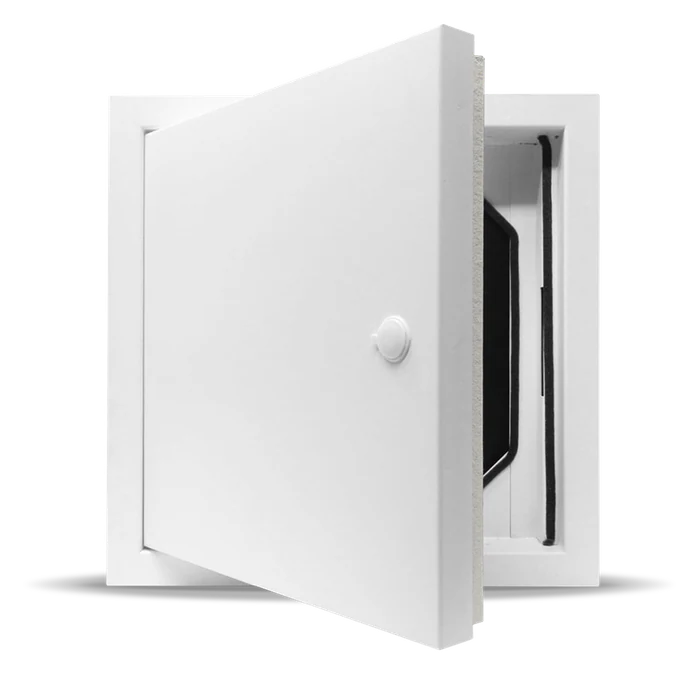

Maintaining commercial and industrial buildings requires frequent and safe access to the roof. From HVAC checks and solar panel maintenance to general building inspections, ensuring secure entry and exit is paramount. This is where a reliable roof access ladder transitions from a simple piece of equipment to a critical safety system.
In this comprehensive guide, we explore the essential safety solutions and considerations for rooftop maintenance and inspection when it comes to roof access ladders for commercial environments.
- The Critical Importance of Safe Roof Access
- Permanent vs. Temporary Solutions for Roof Access
- Ensuring UK Compliance and Safety Standards
- Applications in Commercial and Industrial Buildings
- Your Next Step in Roof Safety
The Critical Importance of Safe Roof Access
The consequences of inadequate roof access are severe, impacting both employee welfare and business liability. Falls from height consistently rank as the UK’s leading cause of workplace fatalities, with the Health and Safety Executive (HSE) stating 50 that workers lost their lives due to falls from height in the last year, accounting for a staggering 36% of all workplace fatalities that year.
For any responsible commercial enterprise, mitigating this risk by providing planned, secured, and compliant commercial access ladders is non-negotiable.
Permanent vs. Temporary Solutions for Roof Access
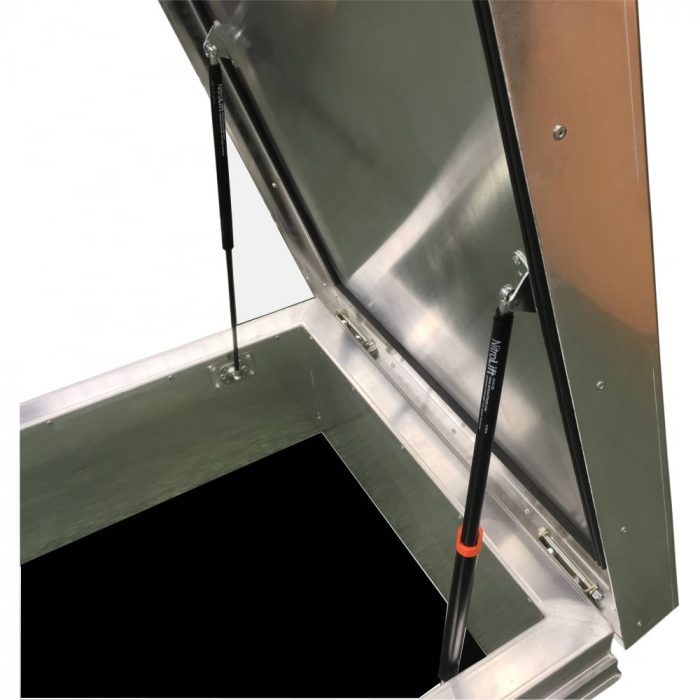
When planning maintenance regimes, facility managers must decide between fixed, permanent systems and portable, temporary ladders for roof access. For commercial and industrial properties requiring routine maintenance, permanent systems are almost always the superior and safer choice.
Permanent Fixed Systems: The Optimal Choice
For any building where access is required regularly, whether for plant maintenance, inspection of solar arrays, or general upkeep, a permanent fixed system offers the highest level of safety and security.
These solutions typically combine a secure roof access hatch with a ladder or a vertical fixed ladder system. Key advantages include:
- Controlled Access: Installing a lockable roof access hatch ladder ensures that only authorised, trained personnel can reach the roof, limiting exposure to risk.
- Stability and Compliance: Permanent fixed roof access ladders are installed and secured to the building structure, eliminating the risk of movement or slippage associated with portable equipment.
- Integrated Safety: Fixed systems often include guardrails, handholds, and safety cages, providing enhanced protection from the ground-level to the roof surface.
When selecting a permanent solution, look for a certified roof access hatch with ladder or fixed roof ladder access that meets current British Standards (BS 4211).
Temporary and Portable Options
While portable ladders have their place for infrequent, short-duration tasks (under 30 minutes), they are responsible for a significant proportion of accidents.
The reality is that inadequate planning and incorrect use of portable equipment is dangerous. HSE-investigated figures show that ladders account for nearly 40% of all falls from height accidents in UK workplaces each year.
If a temporary ladder for roof access must be used, rigorous risk assessment, thorough user training, and correct securing methods are vital. For all planned, routine maintenance, a fixed ladder roof access system is the safest investment.
Ensuring UK Compliance and Safety Standards
For commercial and industrial property owners, compliance is mandatory. The core UK legislation governing safe ascent to any height is the Work at Height Regulations 2005 (WAHR).
WAHR requires that all work at height is properly planned, supervised, and carried out using suitable equipment. When it comes to a permanent roof access ladder, “suitable” means meeting two key standards:
Work at Height Regulations (WAHR) Hierarchy
WAHR requires you to avoid work at height if possible. If not, you must prevent falls (e.g., using permanent edge protection) and, failing that, minimise the distance and consequences of a fall. A fixed roof access ladder system helps prevent falls by providing a secure, maintained, and stable route.
British Standards (BS)
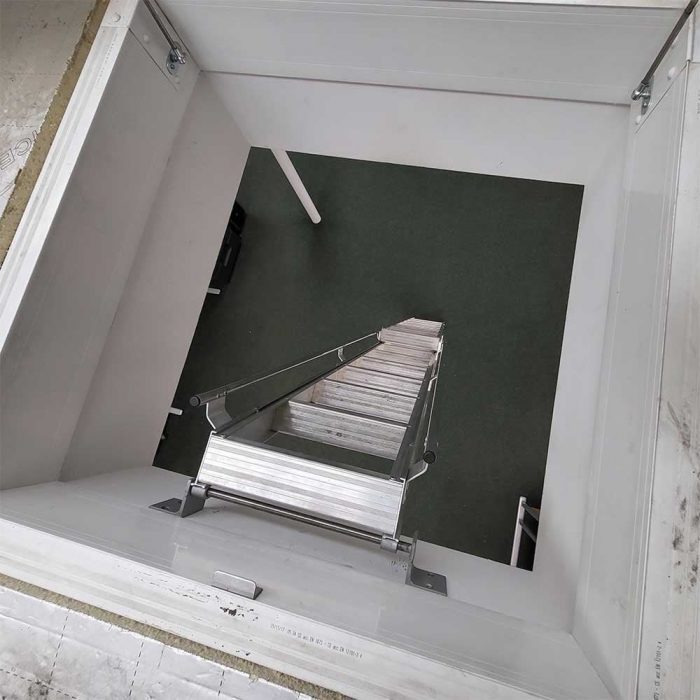
Any fixed access ladder should comply with relevant British Standards, such as BS 4211:2005 + A1:2008, which specifies requirements for fixed ladders, including cages, width, rest platforms, and handholds. Choosing a system that includes a lockable roof hatch access ladder that aligns with these standards demonstrates full commitment to duty of care.
Applications in Commercial and Industrial Buildings
Secure roof access ladders are not just for maintenance workers; they are necessary infrastructure for numerous critical systems across various sectors:
- Retail and Office Blocks: Accessing lift motor rooms, air conditioning units, and communication equipment.
- Manufacturing and Warehousing: Routine inspection of roof fabric, structural integrity, and large-scale ventilation systems.
- Energy and Utility: Maintenance of solar PV installations and other rooftop plant machinery.
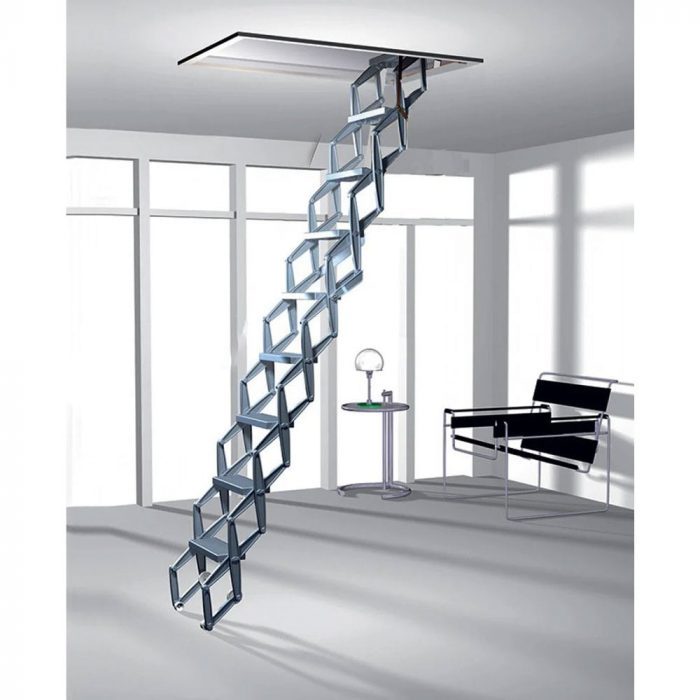
In all these scenarios, having a clearly defined and engineered route, whether it’s a standard fixed vertical ladder or a modular system incorporating step-overs and an integrated roof access hatch ladder, ensures that access is efficient, secure, and above all, safe.
Your Next Step in Roof Safety
We understand that the safety of your personnel and the compliance of your commercial building are top priorities. Investing in a permanent, compliant roof access ladder system is the most effective way to eliminate the risks associated with temporary equipment and ensure smooth, hazard-free rooftop inspections and maintenance.
Ready to enhance your safety provisions? Explore Jupiter Blue’s range of fully certified, custom-designed fixed rooftop access ladders and access hatches, or get in touch with our experts today to find the perfect solution for your building.