
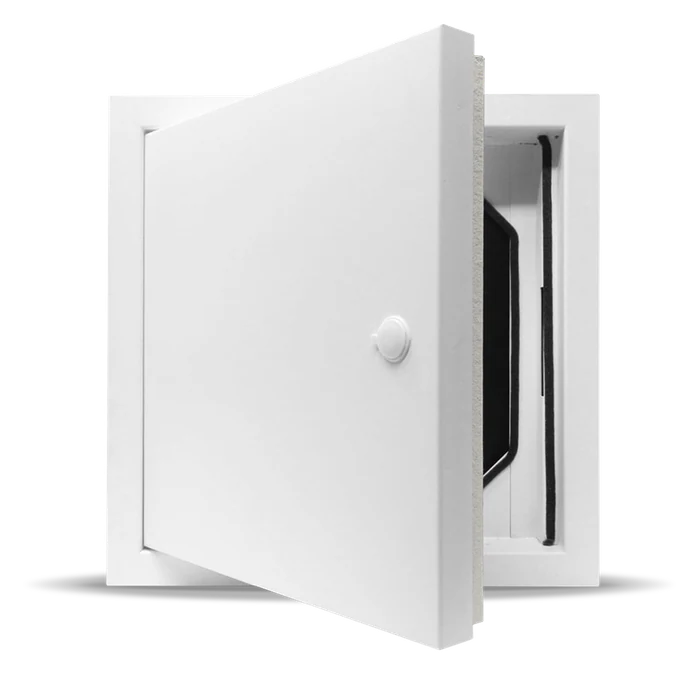



Loft hatches are an essential aspect of any home with an attic or loft space. They provide access to critical services such as water tanks and provide upper storage areas and play a crucial role in maintaining proper ventilation and insulation. However, many homeowners have questions about these hatches, their sizes, fire safety, and installation methods. In this blog post, we’ll cover 7 of the most popular questions people ask about loft hatches and provide you with the answers you need.
1) What size loft hatch do I need?
The size of your loft hatch depends on your specific needs. In general, it should be large enough to allow easy access for you to climb into the loft space and move items in and out comfortably. A typical loft hatch size is around 550 – 600mm wide and 550 -760mm long, but it can vary based on your joist spacings, the size of your attic and your preferences. If you have large or bulky items to store in the loft, you may consider a larger hatch for convenience. To find the size you need measure between the timbers which form your loft opening.
2) Do I need a fire-rated loft hatch?
In some cases, yes, you may need a fire-rated loft hatch. UK building regulations require HMOs (Houses of Multiple Occupation) and any residental property of 3 storeys or more to have fire rated loft hatches.
Fire-rated loft hatches are designed and tested to withstand fire for a certain period, providing additional protection in case of a fire. Even if you are not required to fit a fire rated loft hatch, there are some good reasons to consider fitting one. Firstly, building regulations are only a minimum standard, you can fit a fire rated loft hatch in any property. Our fire rated loft hatches are robust, well insulated and well sealed, they are also available in a number of different standard sizes which may suit your property. If you’re unsure whether you need a fire rated loft hatch we recommend you check with your local building control department for guidance.
3) Can I make my loft hatch opening bigger?
In some situations, it is possible to make your loft hatch opening bigger. However, it’s essential to approach this task with caution. Altering the size of the opening may affect the structural integrity of the ceiling and compromise its load-bearing capacity. It’s best to seek advice from a reputable builder or structural engineer to ensure the modification is safe and doesn’t compromise the structural integrity of the roof / ceiling. Assuming you have clear space around your loft opening it is generally possible to increase the length of your loft opening by trimming the ceiling plasterboard. Note you need to check there are no obstructions such as cables or pipes in the area of the loft where the enlarged opening will be. The width of the loft opening will be dictated by the spacing of your ceiling joists, these are structural members and should not be modified without consulting a structural engineer. We’d generally say this is a job for a building trade professional.
4) Why does my loft hatch open when it’s windy?
Loft hatches that open unexpectedly during windy conditions can be frustrating. This usually occurs with push up style loft hatches, wind can create a pressure difference between the outside and inside of the home, leading to the hatch being lifted open. To prevent this issue, ensure your loft hatch is properly secured. You might want to consider fitting a drop down loft hatch, the frame and lid are connected so the lid will stay in place regardless of the weather conditions. See question 7 for an overview of the benefits of drop down and push up loft hatches.
5) Can I put a loft hatch in my bathroom?
In theory, you can install a loft hatch in your bathroom, but it’s not a common practice due to potential privacy and safety concerns. Bathrooms are private spaces, and adding a loft hatch might compromise privacy. Additionally, the increased humidity and moisture in bathrooms can affect the integrity of the loft hatch over time. The loft hatch would need to be very well sealed to minimise vapour transfer into the loft space.
6) What size does a loft hatch need to be?
The NHBC (National House Building Concil) stipulates loft hatches need a minimum clear opening of 520mm in each direction. This size will provide access into the loft although not with much clearance, when you factor in the space an access ladder takes up. As mentioned earlier in question 1, a typical loft hatch size is around 550 – 600mm wide x 550 – 760mm long. However, the size you need may vary based on factors like the size of your attic, the type of items you plan to store, and any specific access requirements.
7) Which type of loft hatch: hinged or push-up? What are the pros and cons of each?
Both hinged and push-up loft hatches have their advantages and disadvantages. Here’s a quick comparison:
Hinged Loft Hatches:
Pros:
– Easier to operate with a simple opening and closing mechanism.
– Some hinged hatches come with built-in ladders for easy access.
– Better insulation and draught sealing due to the fixed frame.
Cons:
– The clear opening is reduced by the thickness of the door and insulation.
Push-up Loft Hatches:
Pros:
– Space-efficient as they don’t need extra room for swinging open.
– Simple and cost-effective design.
Cons:
– May not provide as tight a seal as hinged hatches.
– Can be more challenging to open and close, especially with heavy insulation.
– Not suitable for use with loft access ladders which are stored in the loft.
Ultimately, the choice between hinged and push-up loft hatches depends on your specific preferences, available space, and budget.
In conclusion, loft hatches are essential for accessing your attic or loft space conveniently and safely. Understanding the right size, type, and fire safety requirements will help you make informed decisions when choosing or modifying a loft hatch for your home. Always consult with professionals to ensure that your loft hatch installation meets all necessary regulations and safety standards.