
In the commercial world, roof access is not a luxury, it’s an operational necessity. Regular inspections, HVAC maintenance, and essential repair work all require safe, reliable access to the rooftop. However, relying on temporary equipment like scaffolding or portable ladders introduces risks, delays, and logistical complications. This is why more businesses are turning to integrated systems. The solution? Roof Hatches with Ladders.
Choosing a dedicated roof hatch with ladder system transforms a necessary administrative chore into a simple, secure routine. This comprehensive guide explains why an integrated system is the smart, compliant, and cost-effective choice for modern building management, detailing when to choose them, exploring material options, and highlighting essential safety features.
- Why Choose a Roof Hatch with an Integrated Ladder?
- The Importance of Permanent, Safe Access
- Streamlining Maintenance and Compliance
- Essential Safety Features of Roof Hatches with Ladders
- Exploring Your Options: Ladder Materials for Commercial Use
- Installation and Maintenance: Getting Your Roof Access Right
- The Smart Choice for Roof Access
Why Choose a Roof Hatch with an Integrated Ladder?
For building managers and facilities teams, the question isn’t whether you need roof access, but how to make that access as efficient and secure as possible. The strategic decision to install a roof hatch ladder permanently solves numerous challenges associated with temporary setups. When should you choose this integrated solution over a freestanding ladder? The answer is whenever routine, supervised access is required.
The Importance of Permanent, Safe Access
Integrated systems, such as a high-quality roof hatch access ladder, offer unparalleled safety. They are professionally fixed to the structure, eliminating the risk of movement or improper placement, a major hazard with portable ladders. Furthermore, fixed access points ensure compliance with the UK’s stringent health and safety regulations, particularly the Work at Height Regulations 2005.
A well-designed roof hatch ladder is also about consistency. Every user, whether an internal maintenance crew member or an external contractor, uses the exact same, tested, and secure route every time. This standardisation drastically reduces the potential for human error and ensures a continuous level of safety for anyone ascending or descending from the roof level.
Streamlining Maintenance & Compliance of Roof Hatches with Ladders
By incorporating the ladder directly into the access route, you create a complete, self-contained system. This drastically cuts down on setup time. There is no need to retrieve, transport, and secure a separate ladder before work can begin. This efficiency is crucial in commercial environments where time is money and swift response to issues is paramount.
For commercial properties, compliance is non-negotiable. Using a purpose-built roof access hatch with ladder demonstrates due diligence and a commitment to employee safety. These products are often certified to meet specific industry standards, making health and safety audits significantly simpler. Whether you need a standard solution or a bespoke roof access hatch ladder built for a specific aperture, choosing an integrated option is the clear path to streamlined safety management.
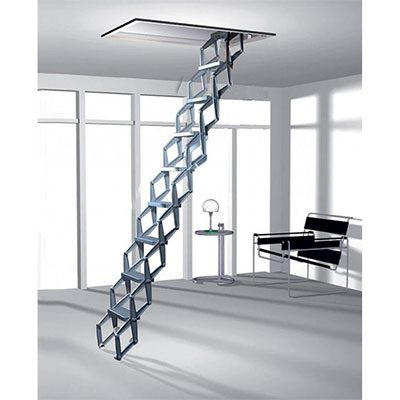
Open your loft hatch with the push of a button
Essential Safety Features of Quality Roof Hatches with Ladders
Safety isn’t an accessory; it is the core function of a roof hatch ladder. The design and installation of your access system must proactively mitigate the risk of falls, the single greatest hazard when working at height.
To put the risks into perspective, the Health and Safety Executive (HSE) reports that falls from height comprised 25% of all workplace fatalities in 2024/25, accounting for 35 deaths out of 92 total workplace fatalities. Furthermore, almost 1 in 5 deaths in construction work involve roof work. These sobering statistics underscore the necessity of investing in secure, robust roof hatches with ladders.
The best roof hatch access ladders include several key features and ladder accessories designed to maximise user security:
Integrated Grab Rails
These extend beyond the top of the ladder and the roof hatch access with ladder opening, providing a secure handhold grab rail during the critical transition phase from the ladder to the roof surface.
Non-Slip Rungs
High-grip or serrated rungs are essential for maintaining secure footing, especially in damp or wet conditions.
Guardrails/Parapet
Many commercial fixed ladders are installed with a safety cage or guardrails to prevent backward or lateral falls, particularly when the ladder exceeds certain height limits.
Self-Closing Hatch
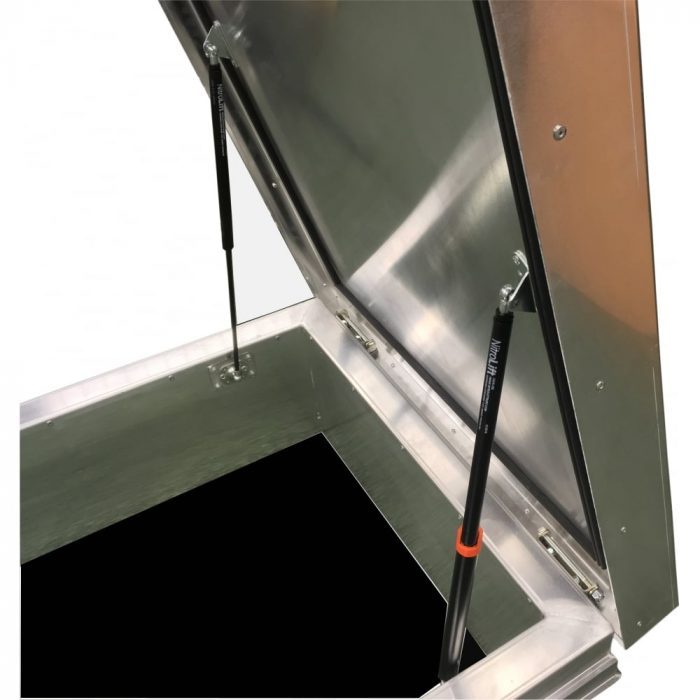
The roof hatch itself should feature a spring or gas strut mechanism that allows for controlled, easy opening and closing, and a secure locking mechanism to prevent unauthorised access.
Choosing a fixed ladder for roof hatch access that incorporates these features ensures you are providing the highest level of protection available.
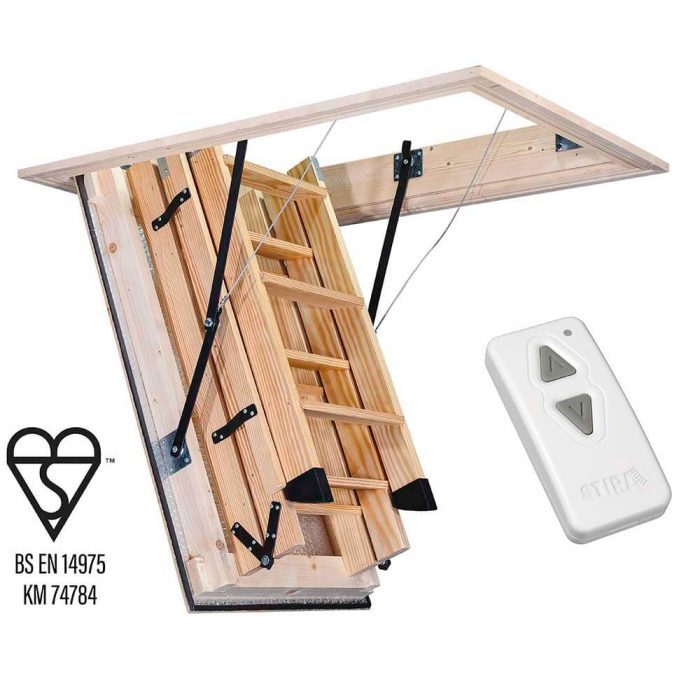
Zedfold ladder in conjunction with a roof access hatch
Exploring Your Options: Ladder Materials for Commercial Use
When selecting roof hatches with ladders, the material choice is crucial, impacting the system’s durability, weight, cost, and suitability for the specific environment. Commercial roof access hatch ladders are typically constructed from either aluminium or mild steel.
Robust Aluminium Roof Hatches with Ladders
Aluminium is the material of choice when weight and corrosion resistance are primary concerns. A major benefit of aluminium is its lightweight nature, which makes installation easier and places less stress on the building structure.
- Corrosion Resistance: Aluminium naturally resists rust, making it an excellent option for coastal locations or industrial environments where moisture and chemical exposure are higher. This long-term durability reduces maintenance costs.
- Ease of Use: Aluminium roof hatch access ladders are generally easier to handle and operate, often featuring sleek designs that are functional yet unobtrusive.
- Ideal Application: Best suited for high-frequency access points or where the installation demands a lighter load-bearing solution. If you need robust yet easy-to-use roof access hatch ladders for regular light maintenance, aluminium is superb.
Durable Steel Roof Hatches with Ladders
For environments demanding maximum strength, rigidity, and security, mild steel roof hatch with ladder systems are often preferred.
- Maximum Strength: Steel is inherently stronger and more robust than aluminium, making it ideal for heavier loads or applications where the ladder might be subject to greater stress.
- Security: Due to its weight and rigidity, a steel roof hatch ladder offers increased security against tampering or forced entry when paired with a heavy-duty access hatch.
- Finish: Steel requires surface protection. At Jupiter Blue, we ensure our steel roof hatch ladders are treated with a durable, anti-corrosive finish, such as powder coating or hot-dip galvanisation, to protect them against the elements and guarantee a long, functional life.
The decision between steel and aluminium for your roof hatch ladder should be based on your building’s specific needs for load capacity, climate resilience, and security level. Both options, when manufactured to high standards, provide a reliable solution.
Installation and Maintenance: Getting Your Roof Access Right
Even the highest quality roof hatch ladder requires correct installation and diligent maintenance to guarantee safety throughout its lifespan.
Expert Installation Advice
A key requirement for any roof hatch ladder system is that it must be installed by competent professionals. Proper fitting ensures the structure is correctly anchored, the ascent angle is compliant, and the ladder extends sufficiently above the roof surface for a safe transfer. For maximum safety and compliance, ensure that any roof hatches with ladders you install are positioned away from electrical hazards or fragile roof surfaces, such as unmarked rooflights.
Maintaining Your Roof Hatches with Ladders
Regular inspection is mandated by law and is critical for maintaining your system’s integrity. The fixed nature of commercial roof hatch ladders means maintenance is generally straightforward.
- Visual Checks: Conduct frequent checks for signs of corrosion, loose fixings, or damage to rungs and welds.
- Hatch Function: Ensure the roof hatch mechanism, including the gas struts, hinges, and locking system, is operating smoothly and securely. A well-maintained roof hatch ladder is a reliable long-term investment.
The Smart Choice for Roof Access
The right roof hatch ladder system is the critical link between the inside of your building and its external maintenance needs. By moving away from temporary solutions, you invest in a permanent asset that saves time, reduces risk, and ensures compliance. Whether you require the lightweight resilience of aluminium or the robust security of steel, the integrated roof hatch access with ladder solution offers superior safety and longevity for commercial applications.
At Jupiter Blue, we pride ourselves on offering quality access solutions, great prices, and friendly, professional service. We offer a comprehensive range of roof hatch ladders suitable for every commercial requirement.
Ready to enhance your building’s safety and simplify your maintenance routines? Explore our selection of roof hatches and integrated access ladders today, or get in touch with our product specialists to find the perfect solution for your project.