
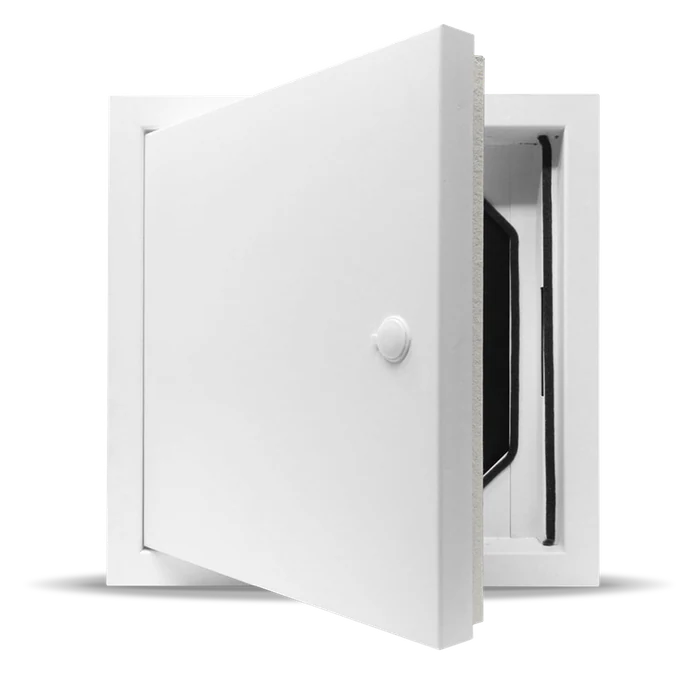


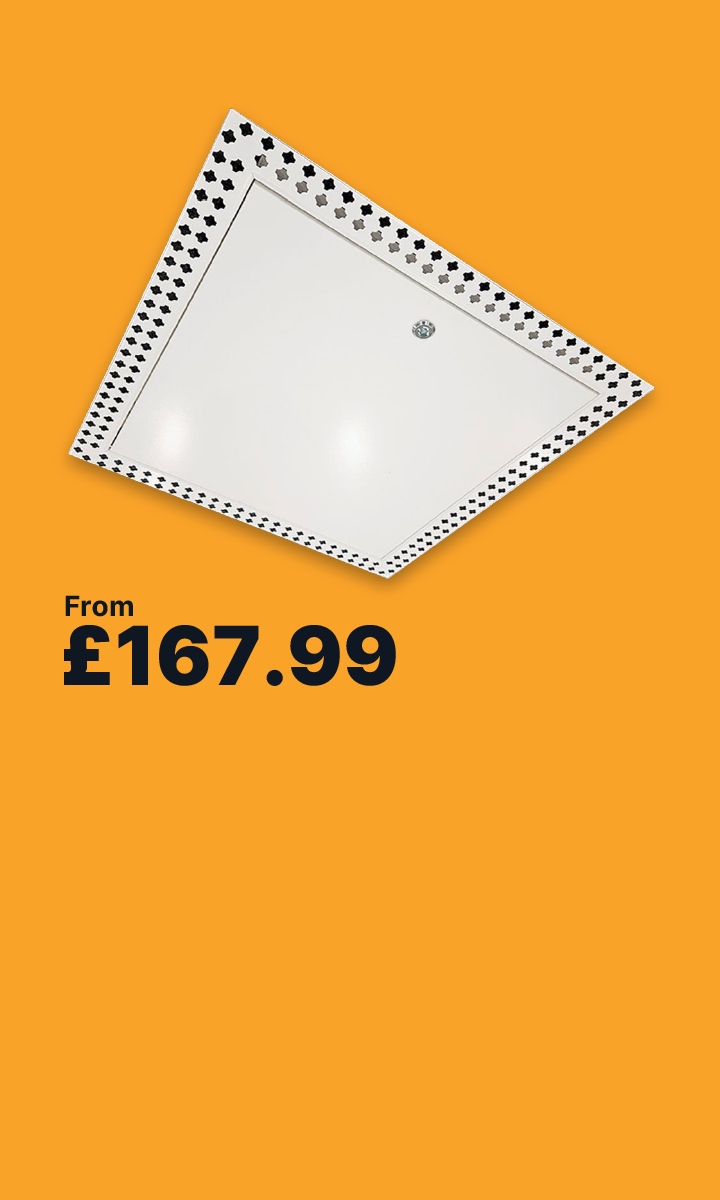
If you think choosing a loft hatch is about picking between a plastic or steel loft hatch, you’re asking the wrong question. Because a loft hatch isn’t just a flap in the ceiling. It’s a thermal weak point, a potential fire break, an airtightness detail, a compliance issue, and, if specified badly, a slow leak in your heating budget. So the real question isn’t “plastic or steel?” It’s: What does this loft hatch need to do? Keep reading as we guide you in choosing the loft hatch that actually protects your home.
- Why Your Loft Hatch Matters More Than You Think
- What a Loft Hatch Actually Has to Do
- Plastic Loft Hatches: Simple, Affordable, Standard
- Steel Loft Hatches: Built for Performance
- Fire Rated Loft Hatches: When Compliance Is Not Optional
- Plastic or Steel Loft Hatch, Which Should You Choose?
- Loft Hatches and Energy Efficiency
- The Smart Way to Specify a Loft Hatch
- Ready to Choose the Right Loft Hatch?
Why Your Loft Hatch Matters More Than You Think
Most homeowners obsess over loft insulation, quite rightly. Proper attic insulation can reduce heat loss by up to 25%. But here’s the uncomfortable truth: A poorly sealed loft hatch can quietly undermine that investment.
Your loft access hatch sits right in the ceiling plane, the boundary between warm air below and cold air above. If it’s poorly insulated or badly sealed, warm air escapes, and warm air, like money, rises. So when choosing between a plastic or steel loft hatch, material isn’t cosmetic, it’s strategic.
What a Plastic or Steel Loft Hatch Actually Has to Do
Every loft hatch, whether plastic or steel, has four jobs:
- Provide safe, reliable access
- Maintain thermal continuity
- Support airtightness
- In some cases, provide fire resistance
That last point is where things get serious because not all loft hatches are equal, and not all can be fire rated loft hatches.
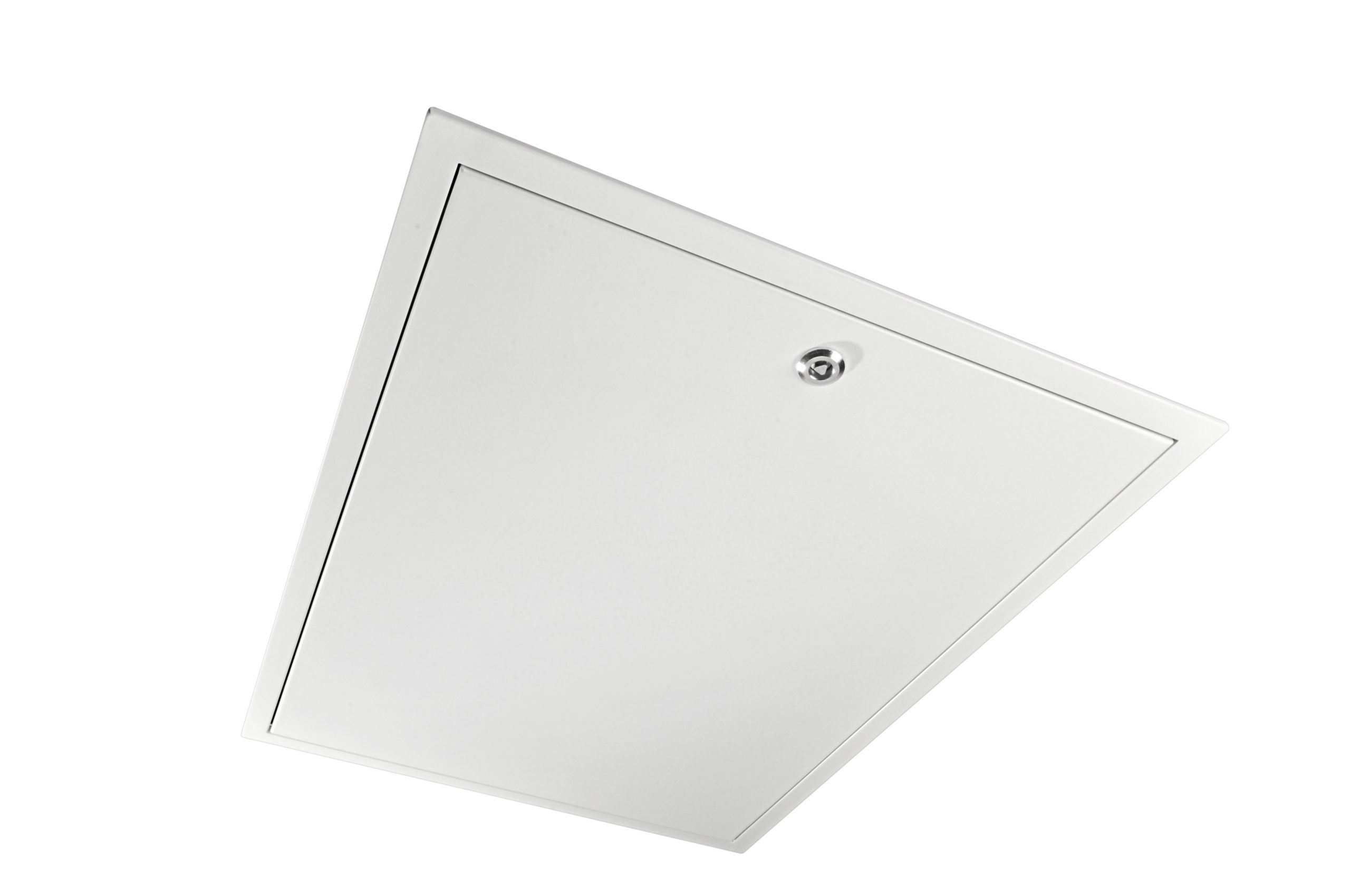
Plastic Loft Hatches: Simple, Affordable, Standard
Let’s start with the appeal of the plastic loft hatch.
Cost-Effective and Widely Available
Plastic loft hatches are affordable and quick to install. For straightforward domestic projects with standard ceiling openings, they do the job.
Decent Thermal Performance
Most plastic loft hatches provide reasonable insulation. For many homes, particularly where no fire rating is required, they’re perfectly serviceable.
Standard Sizes Only
Here’s the catch: plastic loft hatches typically come in fixed sizes. If your opening is unusual, awkward, or older than your boiler, you may struggle.
No Fire Rating Option
This is non-negotiable. Plastic loft hatches cannot be specified as fire rated loft hatches. If Building Regulations require a fire rated loft hatch, for example in multi-storey dwellings, conversions or certain commercial settings, plastic simply isn’t an option.
Steel Loft Hatches: Built for Performance
Now let’s look at the steel loft hatch. Not because steel sounds tougher, but because it behaves differently.
Structural Stability
Steel loft hatches resist bowing, warping and movement over time. That matters because if a hatch distorts, the seal fails. And when the seal fails, performance drops.
Superior Airtightness
Many steel loft hatches use compression seals, which means when the hatch closes, it seals properly – not loosely, not optimistically. If you’re serious about airtightness, steel performs better.
Made-to-Measure Loft Hatches
This is where steel wins decisively. Steel loft hatches can be manufactured as made-to-measure loft hatches, tailored to non-standard openings. In older properties or bespoke builds, this flexibility is invaluable.
Fire Rated Loft Hatches
If you require a fire rated loft hatch, steel is the solution. Fire rated loft hatches are designed and tested to maintain compartmentation for a defined period, protecting escape routes and slowing fire spread.
In short: If fire rating is required, the decision is already made.
Fire Rated Loft Hatches: When Compliance Is Not Optional
Let’s be clear. If your project requires a fire rated loft hatch, this is not about preference, it’s about compliance. Building Regulations in certain scenarios demand fire resistance between floors or compartments, and a standard plastic loft hatch cannot provide that.
A properly specified fire rated steel loft hatch:
- Maintains structural integrity under fire conditions
- Helps protect escape routes
- Supports regulatory compliance
- Provides reassurance for insurers and building control
And in fire safety, reassurance is not a small thing.
Plastic or Steel Loft Hatch, Which Should You Choose?
Instead of asking “Which is better?” when choosing a plastic or steel loft hatch, ask:
What matters most?
| Priority | Best Loft Hatch Option |
| Lowest upfront cost | Plastic loft hatch |
| Standard domestic ceiling opening | Plastic loft hatch |
| Improved airtightness | Steel loft hatch |
| Long-term durability | Steel loft hatch |
| Non-standard opening | Made-to-measure steel loft hatch |
| Fire resistance required | Fire rated steel loft hatch |
Notice something? Material follows performance. Define the outcome first and the right loft hatch becomes obvious.
Loft Hatches and Energy Efficiency
The UK still has millions of homes with suboptimal insulation levels. But even where insulation is adequate, performance depends on sealing weak points. A well-specified loft hatch supports:
- Reduced heat leakage
- Better draught control
- Improved energy efficiency
- Lower heating bills
If you’re investing in insulation, it makes little sense to ignore the access point that interrupts it.
The Smart Way to Specify a Loft Hatch
At Jupiter Blue, we don’t start with “plastic or steel?”
We start with:
- Is fire rating required?
- Is airtightness a priority?
- Is the opening standard or bespoke?
- Is this retrofit, renovation or new build?
From there, we recommend:
- Plastic loft hatches for simple, cost-led projects
- Steel loft hatches for durability and airtightness
- Made-to-measure loft hatches for awkward openings
- Fire rated loft hatches where compliance demands it
Because a loft hatch isn’t an afterthought. It’s a detail that either supports your building performance — or quietly undermines it.
Ready to Choose the Right Loft Hatch?
Whether you need:
- A standard plastic loft hatch
- A high-performance steel loft hatch
- A made-to-measure loft hatch
- Or a fully compliant fire rated loft hatch
The team at Jupiter Blue can help you specify the right solution. Because when it comes to loft hatches, what looks like a small decision can make a measurable difference.
Call 01937 325 325 or email the team to discuss your project requirements.