


Access panels are one of those building components that often go unnoticed, until they’re needed. Whether you’re planning a renovation, managing a commercial property, or simply trying to future-proof your home, understanding what access panels are, what access panels are used for, and how to choose the right one can save time, cost, and disruption later on.
This guide is designed for beginners, explaining access panels clearly and practically, with a focus on how they’re used in walls and ceilings across the UK.
- What Are Access Panels?
- What Are Access Panels Used For?
- Where Are Access Panels Typically Installed?
- Types of Access Panels Explained
- How to Choose the Right Access Panel
- How to Install Access Panels (To a High Level)
- Access Panels in the UK: Why Quality Matters
- Choosing the Right Access Panel
- Explore Access Panels with Jupiter Blue
What Are Access Panels?
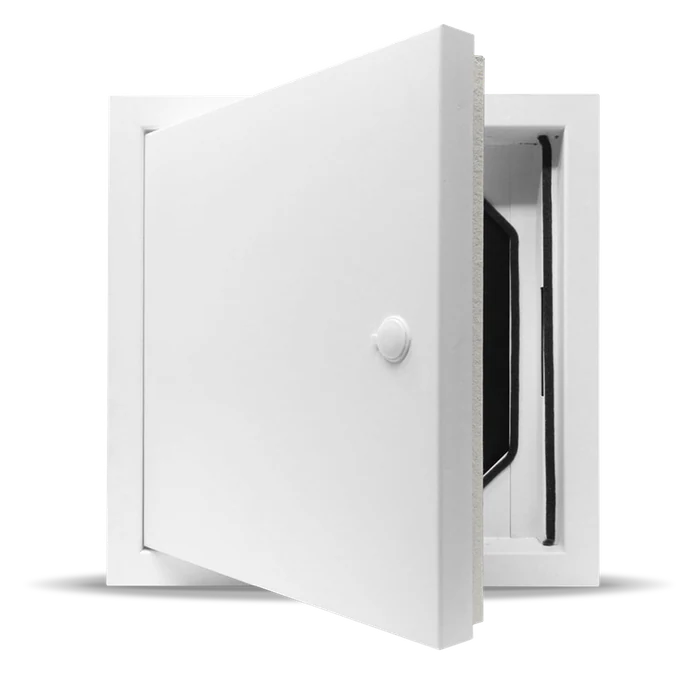
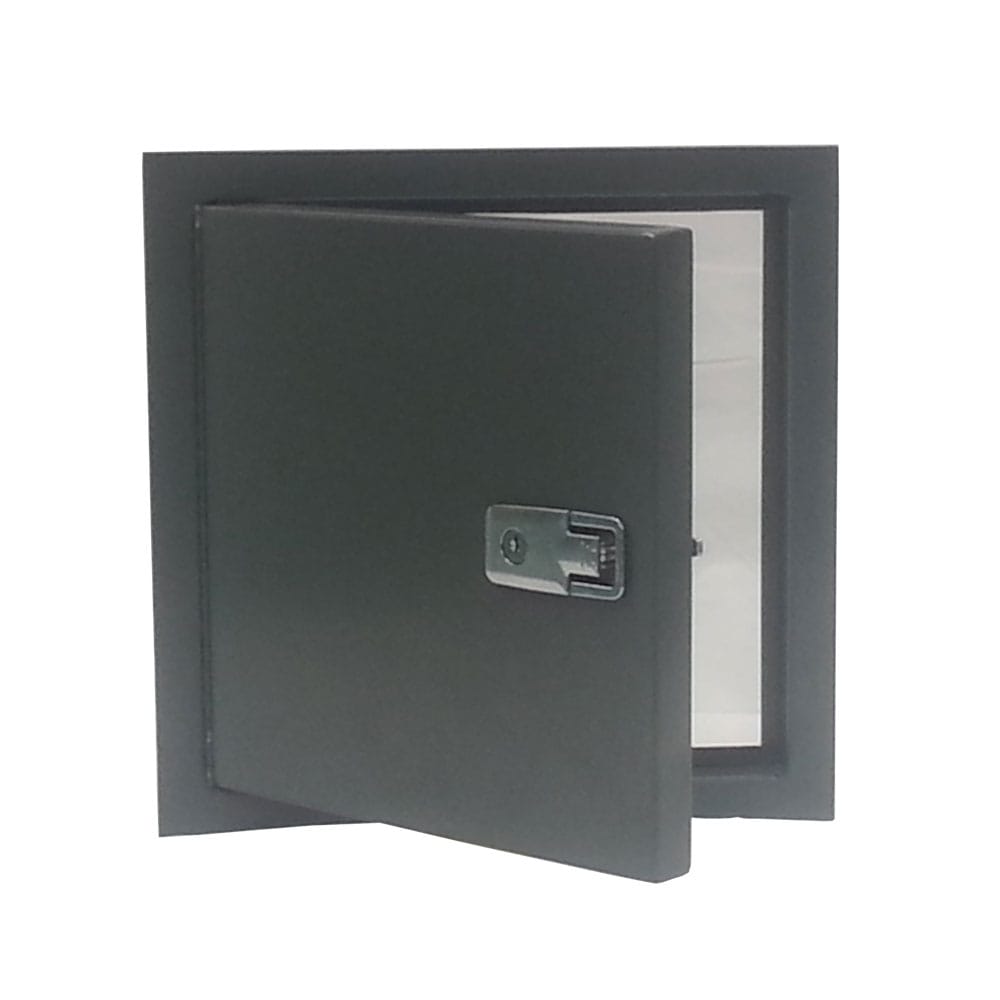
An access panel typically has a hinged door and is fitted into a wall or ceiling that allows safe, discreet access to concealed services. These services can include plumbing, electrics, HVAC systems, valves, meters, or control points that require inspection or maintenance over time.
Rather than cutting into plasterboard or damaging finishes, access panels UK standards encourage planned access points that keep buildings compliant, safe, and easy to maintain. Once installed, access panels sit flush with the surface and can be painted or finished to blend into the surrounding area.
In short, access panels allow access when needed, without visible disruption the rest of the time.
What Are They Used For?
Access panels are used wherever building services are hidden behind walls or ceilings but still need to be reachable. Common uses include:
- Plumbing access to stop taps, valves, and pipework
- Electrical access to junction boxes and control units
- HVAC access for dampers and controls
- Fire safety access to fire dampers or service risers
- General maintenance in commercial and residential buildings
In the UK, building regulations increasingly emphasise accessibility for inspection and maintenance. For example, guidance linked to Approved Document B highlights the importance of providing access to fire safety components, such as dampers, without damaging building fabric. This makes well-placed wall access panels and ceiling access panels an essential part of compliant building design.
Where Are Access Panels Typically Installed?
Access Panels in Walls
An access panel in wall applications is common in bathrooms, kitchens, corridors, and service risers. Wall access panels are often used to reach:
- Concealed pipework behind sanitary ware
- Electrical controls or isolation switches
- Stop valves or meters in communal areas
Wall panels are usually designed to sit flush with plasterboard or masonry finishes and can be discreetly painted to match the wall.
Access Panels for Ceilings
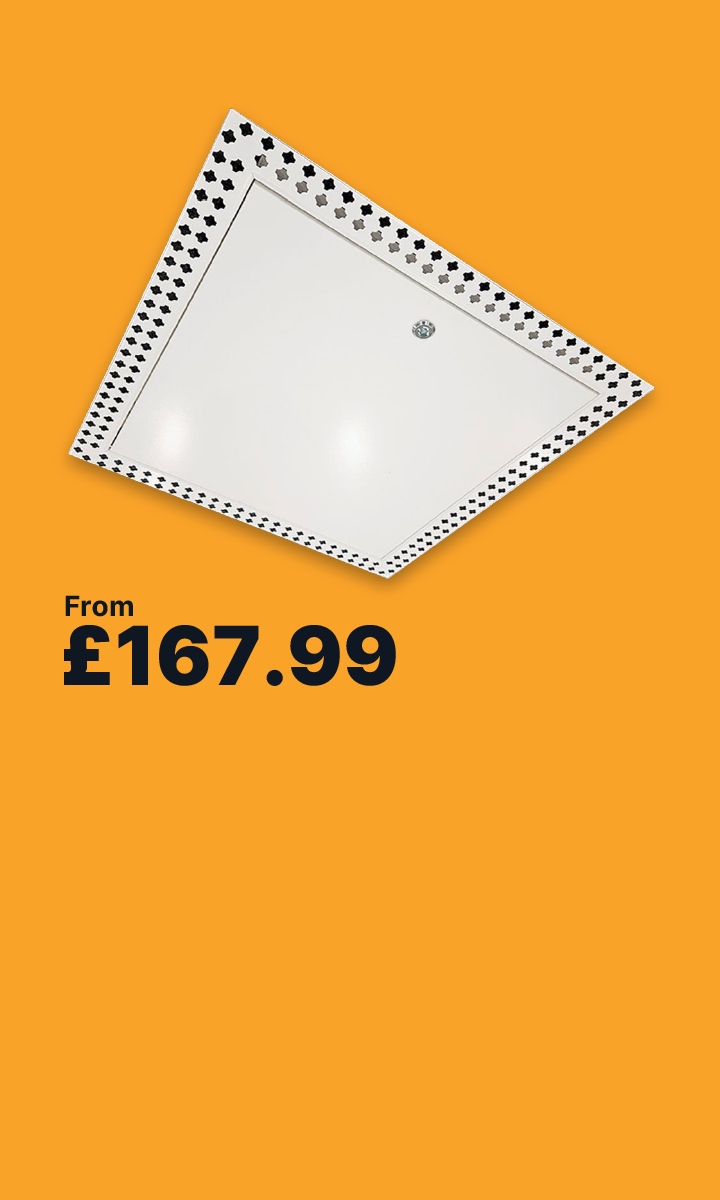
An access panel for ceiling installations is widely used in both domestic and commercial settings. Ceiling access panels provide entry to:
- Loft spaces
- Ceiling voids housing electrics or HVAC
- Fire dampers in suspended ceilings
In fact, ceiling voids are increasingly used to route services in modern buildings. The UK Green Building Council reports that improved access to building services supports long-term building efficiency and maintenance planning.
Types of Access Panels Explained
The truth is, there is no single “best” access panel. Instead, the right type depends on location, performance requirements, and frequency of access needed.
Standard Access Panels
These are simple, cost-effective panels designed for basic access needs. They’re suitable for low-risk areas where fire resistance or airtightness is not a requirement.
Fire-Rated Access Panels
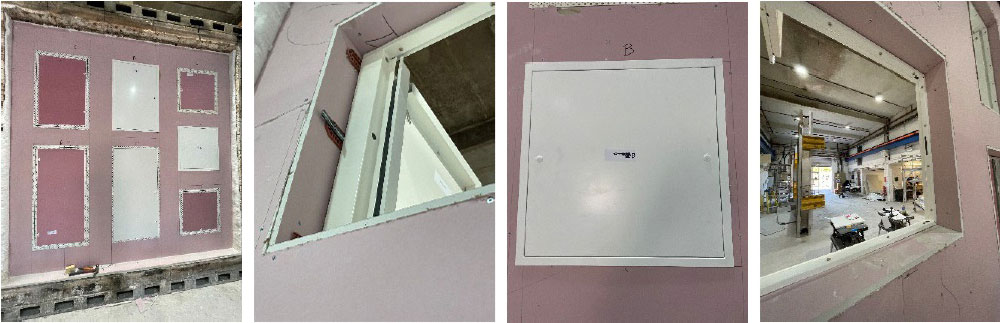
Fire-rated panels are designed to maintain the fire resistance of a wall or ceiling. They are commonly required in apartment buildings, commercial premises, and escape routes where fire compartmentation must not be compromised.
Airtight & Insulated Access Panels
Where energy efficiency matters, insulated access panels help reduce heat loss and prevent draughts. Tests confirm that air leakage can reduce the effectiveness of insulation by up to 70%, increasing heating demand and energy bills. This is particularly important in ceilings below unheated spaces or in thermal envelopes.
Metal vs Plastic Access Panels
Metal access panels (often steel) offer strength, durability, and better long-term performance, whereas plastic access panels are lightweight and cost-effective for low-demand environments
When choosing an access panel, material choice should reflect usage, environment, and expected lifespan, not just upfront cost.
 How to Choose the Right Access Panel
When selecting access panels, it helps to work backwards from what the panel needs to achieve.
Ask the Right Questions
- Where will the access panel be installed: wall or ceiling?
- How often will access be required?
- Is fire resistance required?
- Does the panel sit within an insulated or airtight element?
- Does it need to be discreet or decorative?
Consider Compliance & Performance
In many cases, access panels are not optional. They’re a compliance requirement, particularly for fire safety and service maintenance. Choosing the wrong panel can result in failed inspections, increased heat loss, or costly retrofits later.
How to Install Access Panels (To a High Level)
While professional installation is recommended for fire-rated or performance-critical panels, the general process follows a similar pattern:
- Mark the opening based on panel size and service location
- Cut the aperture carefully in the wall or ceiling
- Secure the access panel frame to the surrounding structure
- Fit the panel door and check alignment
- Finish and decorate if required
Correct sizing and positioning are essential. An incorrectly placed panel can restrict access or compromise the surrounding structure. Our made-to-measure access panels are great if you have a non-standard size access point.
Access Panels in the UK: Why Quality Matters
In the UK construction environment, access panels must balance discretion with performance. A poorly specified panel can undermine insulation, create draughts, or weaken fire separation.
That’s why professional specifiers increasingly look for panels that are:
- Durable and stable over time
- Suitable for plasterboard, masonry, or ceiling systems
- Available in fire-rated and insulated variants
- Designed for clean integration with modern interiors
Quality access panels support the building throughout its lifecycle, not just at handover. Buying and installing high quality, reliable access panels is therefore important for the integrity of the building.
Choosing the Right Panel
They may be hidden from view, but their impact is significant. From enabling safe maintenance to supporting fire safety and energy efficiency, the right access panel choice protects both the building and the people using it.
The key is understanding what the panel needs to do, where it will be installed, and how often it will be used. Once those outcomes are clear, selecting the correct access panel becomes straightforward.
Explore Access Panels with Jupiter Blue
At Jupiter Blue, we supply a carefully considered range of access panels UK customers can rely on, from wall access panels to ceiling access panels designed for performance, compliance, and longevity:
- Fire Rated Access Panels
- Bespoke Size Access Panels
- Non Fire Rated Access Panels
- Plasterboard door access panels
- Tile access panels
- Air tested access panels
- Exterior access panels
- Acoustic access panels
- Circular access panels
- Anti-ligature access panels
Explore our solutions online or get in touch with our team to discuss your project requirements and find the right solution with confidence.